Why Belton · Guide 01 of 9 · Relocating
Moving to Belton, Texas: The Complete Relocation Guide
Moving to Belton, Texas means trading Austin prices for Hill Country land, trading traffic for a fifteen-minute drive to Temple, and trading anonymous suburbia for a town with a real square and real neighbors. It is the Bell County seat, home to two lakes, a growing school district, and the Fort Hood community, sitting right on the I-35 corridor about sixty miles north of Austin.
I have watched this town change for years from the inside, and I will give you the straight version: what it really costs, where people actually live, what the schools are like, and the mistakes newcomers make so you do not make them. If you are even halfway serious about Belton, read this before you start looking.
Words by Lisa Copeland · Realtor · eXp Realty
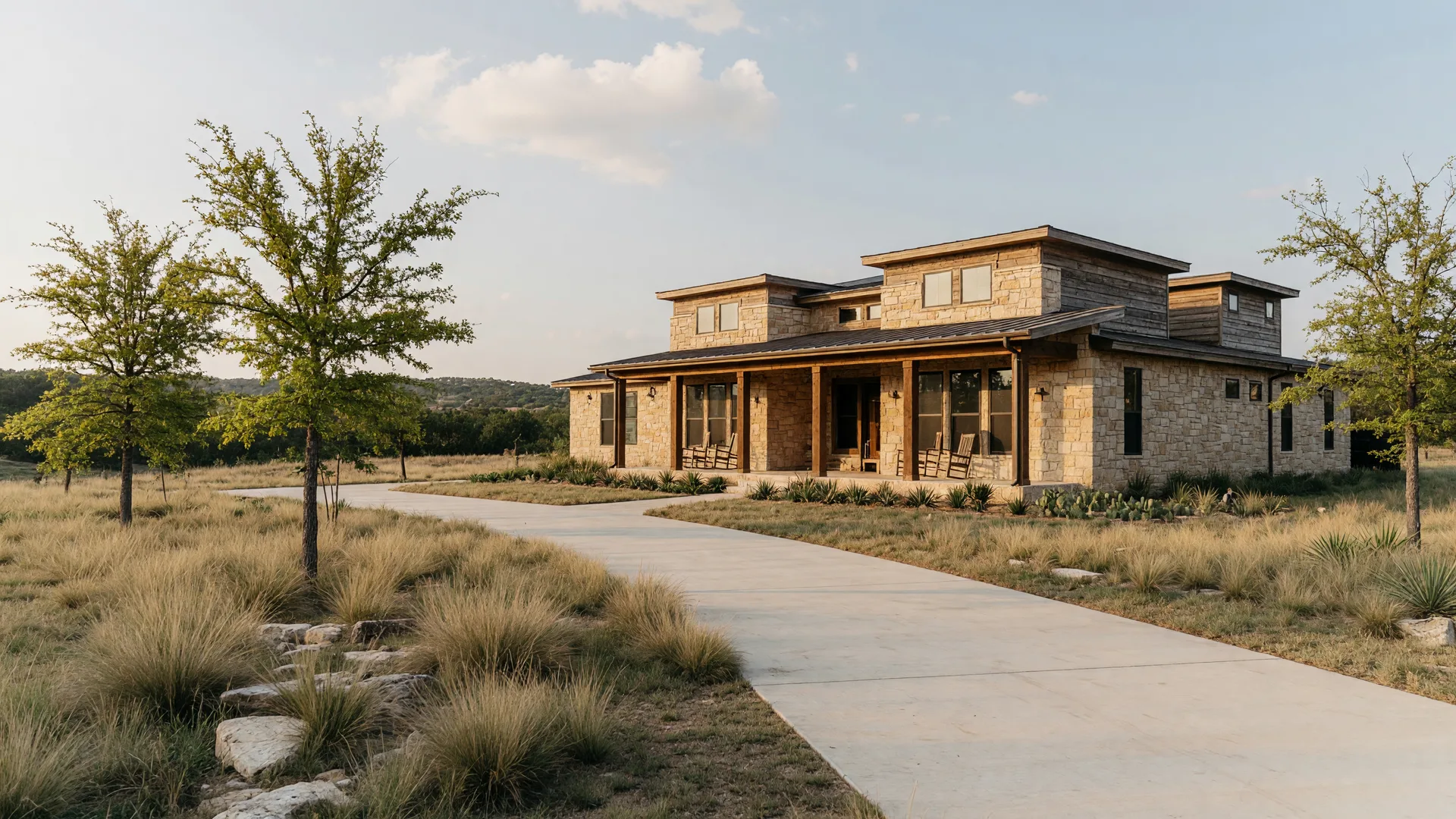
Why Belton is booming right now
Belton has been the quiet neighbor on the I-35 corridor for a long time: the county seat, the college town, the lake town, the place between Temple and nowhere that everyone drove through. That quiet is over. The 2020 census counted about 23,000 residents, and recent Census Bureau estimates put the number near 26,000. For a small town, that is serious growth, and you can feel it in new construction, new restaurants, and new faces at every school pickup.
The boom has three engines. First, Austin's affordability crisis keeps pushing families north along I-35, and Belton is the first town past the worst of the traffic where your money still buys an acre. Second, the Fort Hood community, now Fort Cavazos, anchors steady demand, with thousands of military families cycling through the area every year. Third, the lakes. Lake Belton and Stillhouse Hollow give the town a recreation economy and a quality of life that bedroom communities usually lack.
None of that means Belton is a boomtown circus. It means the town is growing the right way: more homes, more schools, more options, while the square downtown still feels like 1950 on a good day. It is the best of both, and that is exactly why people move here.
The cost of living: what your dollar does in Belton vs Austin
Here is the headline: Austin is roughly forty percent more expensive than Belton in most cost-of-living comparisons. That is not a marketing number, it is the lived experience of anyone who has shopped for a house in both places. Housing is the big difference, and utilities and groceries run higher here than the national average, so be honest with your budget about those.
Median home prices in Belton have recently run in the low-to-mid $300Ks for resale homes, while Austin's median has been well north of $450,000. That gap is the whole story of this guide. The same monthly payment that rents a small apartment in Austin can carry a mortgage on a house with a yard in Belton, and the same price that buys a townhouse in Round Rock can buy acreage with a custom home to be built on it.
For a new custom home in a community like Ranch at Latitude 31, the numbers climb from there, with homes starting in the high $700Ks. But you are paying for something specific: a single-family custom home on a true ranch, not a production house squeezed onto a fifty-foot lot.
The housing market snapshot
The Belton Temple market is a mid-sized, I-35-driven market with real balance. Resale homes in Belton have been listing across a wide range, with a healthy share of inventory in the mid-$200Ks to low-$400Ks, and the market has shown the kind of modest, steady appreciation that rewards people who buy and stay. Inventory has loosened from the crazed days of 2021 and 2022, which means buyers have room to breathe, to negotiate, and to get inspections and appraisals done properly.
The new-construction side is a different animal. Production builders are active along the corridor, and custom builders like Riata Builders, family-owned since 2007, are delivering homes you cannot find in a production neighborhood: one-story ranch plans, stone and timber, acre lots, and the kind of quiet that only comes with real distance between houses. If you want the custom experience, the lot is the first decision, and the homesite inventory changes constantly.
One honest warning: do not shop Belton with Austin eyes. In Austin you are buying location and resale. In Belton you are buying land, light, and lifestyle, and the resale will follow the community as it matures. Buy the land you love, build the home you want, and let appreciation be the bonus it always has been here.
Where to live: neighborhoods for every season of life
Belton does not have one best neighborhood, it has the right neighborhood for your season. Here is how I break it down for the buyers I work with every week.
For families
Families lean toward the established neighborhoods zoned to the schools they want, and toward the newer communities on the south and east sides where builders are active. Ranch at Latitude 31 sits in the 76513 ZIP south of town, and area listings have historically pointed to Chisholm Trail Elementary and South Belton Middle School for that part of the district, with your high school assignment depending on the exact address. Campus boundaries changed recently, so confirm the current feeder pattern for any specific homesite, and I will pull it for you in two minutes.
For commuters
If you work in Temple, nothing beats the north side of Belton: ten to fifteen minutes up I-35, against traffic in the morning. Austin commuters should think about the south side of Belton and being close to 190 and the I-35 entrance, because every mile south of town is a mile saved at 5:00 p.m.
For retirees and empty nesters
Retirees love the lake-adjacent areas, the gated and acreage communities, and anything walkable to the square. The convenience care and clinic network in Belton, plus Baylor Scott & White's medical hub in Temple fifteen minutes north, makes this one of the better small towns in Texas for aging in place well.
For acreage seekers
If you want room for horses, a shop, or just privacy, the answer is the acreage ring around town: FM 439, Paddy Hamilton Road, and the country roads south and west. Ranch at Latitude 31 offers homesites from 0.51 acres up to 3.11 acres with ridgeline views, which is a lot of land for one custom home, and a rare thing this close to I-35.
Utilities and internet
Setting up services is straightforward, with the caveat that rural Texas is rural Texas. Inside and near town you have city water and wastewater, while acreage properties may run on well and septic, which is completely normal here and worth understanding before you buy. Electric service in the Belton area is provided through the Oncor delivery network, most commonly with Reliant as the retail provider, and natural gas is available in many neighborhoods.
Internet is the detail that surprises people. Fiber has expanded across much of Belton, and several providers compete on the corridor, so most homes can get high-speed cable or fiber service. If you work from home, do not guess: confirm the address with the providers before you commit to a lot. Nothing ends a remote-work fantasy faster than a dead spot on the far side of a ranch.
What the weather is really like
Central Texas weather is a contact sport, and Belton sits right in the middle of it. Summers are genuinely hot, with July and August afternoons regularly in the high 90s to low 100s, which is why every serious custom home here is planned around covered porches, deep eaves, and good insulation. Winters are mild and short, with occasional hard freezes and the very rare ice event that shuts down the corridor, and spring brings the Hill Country's famous wildflower bloom and, yes, severe-weather season.
You are also in tornado country, the southern edge of it, so a weather radio and a plan are part of responsible homeownership, and the county runs outdoor warning sirens. Do not let the weather scare you: millions of Texans live this rhythm and love it. It is the price of a climate where you can grill on the porch in February.
The commutes that matter
Be honest with yourself about the Austin commute before you move: two hours round trip four or five days a week is a real chunk of your life, and I-35 is unpredictable. The families who make the Austin commute work are usually doing it two or three days a week with remote work in between, or they move their office to the corridor. The people who are happiest here work in Temple, Killeen, Waco, on post, or remotely.
Typical drive times, with normal traffic
- Temple: about ten to fifteen minutes north on I-35.
- Killeen: about twenty to twenty-five minutes west on US 190.
- Fort Cavazos (Fort Hood) main gate: about thirty to forty minutes.
- Waco: about forty-five minutes north.
- Austin: about sixty to seventy minutes south, longer in rush hour.
- Killeen Fort Hood Regional Airport: about twenty-five minutes.
What you need to know about Bell County taxes
Texas has no state income tax, and it pays for that with property taxes, so understand them before you buy. Your property tax bill is the sum of rates from each taxing district that covers your address: the county, the city (if you are inside Belton), the school district, and any special districts.
Recent adopted rates for a home inside Belton city limits and Belton ISD added up to roughly two dollars per $100 of taxable value, about two percent, which is typical for this part of Texas. Belton ISD's rate has recently been about $1.15 per $100, the city of Belton about $0.52, and Bell County about $0.33, though every district can adjust annually and your total depends on your exact address.
The good news is the homestead exemption. If the home is your primary residence, you file a homestead exemption with the Bell County Appraisal District, and it removes part of your home's value from school taxes, now $140,000 for 2026 after Texas voters raised it, and it caps your appraised value increases at ten percent a year. Texans 65 and older get an additional school-tax ceiling that freezes or reduces what they pay, which is a big deal for retirees. File the exemption in your first year, not your fifth.
The actual moving process: rent vs buy, schools, services
Here is the sequence that works, from the moves I have watched succeed. First, decide rent vs buy. For families unsure of the area, renting for a year in Belton or Temple is smart: it costs a little, and it tells you which side of town you actually love. For anyone clear on their plan, buying now beats renting next year, because prices and lot inventory do not wait.
Second, lock in the school plan. Contact Belton ISD with your address to confirm your current campus assignments, because boundaries changed recently, and tour the feeder campuses if you can. The district runs multiple high schools, including Belton High School and Lake Belton High School, which opened in 2020, and it is one of the more military-friendly districts in the state.
Third, coordinate the boring stuff: change of address, utility setups, vehicle registration, and Texas driver's license. Texas requires vehicle registration within thirty days of establishing residency, and you will need your insurance before you register. Fourth, and this is the one people forget: meet your neighbors before you close. Drive the neighborhood on a Saturday. If the block feels good, the house will too.
Mistakes newcomers make
After years of watching transplants in this corridor, I can tell you the five mistakes I see most. Avoid them and you are ahead of ninety percent of buyers.
The best buyers I work with do one extra thing: they ask me for the straight story on a property even when it costs me a sale. That is the whole job.
The five newcomers' mistakes
- Shopping only online. Photos flatten the land, the light, and the noise. Stand on the lot at dusk before you commit.
- Ignoring school boundaries and assuming they never change. Confirm the current feeder pattern for the exact address.
- Skipping the well, septic, and utility checks on acreage. Those systems are your responsibility, and they are expensive to fix.
- Underestimating the Austin commute. Drive it twice during real rush hour before you buy on hope.
- Waiting for the perfect time. Markets do not wait, and the best lots do not either. The perfect time is when you are ready.
Reality check on small-town living
Let me be honest about what Belton is not, because you deserve the truth. Belton is not a metropolis: you will drive to Temple for some shopping and specialists, and to Austin for the occasional big night out. The square shuts down early on weeknights. Everyone will know your business eventually, and that is either charming or claustrophobic, and only you know which.
But here is what it is: a town where your kids ride bikes to the park, where the lake is twenty minutes with the boat already hitched, where Friday night football fills the stands, and where a porch and a piece of land are not a luxury you budget for, they are the standard. It is the life people describe when they say, we got off the treadmill. In Belton, you do not have to wait until retirement to live like it.
See the life at Ranch at Latitude 31: the community guide“Build the life you deserve. That is not a slogan, it is the assignment. Belton just makes the assignment easier.”
Common Questions · 30 Straight Answers
Common Questions
These are the questions I hear every week, asked the way people actually ask them. Here is how I would answer each one if we were on the phone right now.
01 Is Belton TX a good place to live?
Yes, especially for families, military families, retirees, and anyone who wants Central Texas access without Austin prices. Belton offers two lakes, a historic downtown, a growing school district, and an easy I-35 position, and the cost of living is well below the Austin metro. The honest caveat: it is a small town, so you trade some big-city conveniences for space, quiet, and neighbors who know your name.
02 How far is Belton from Austin?
Belton is about sixty miles north of Austin on I-35, roughly a sixty- to seventy-minute drive with normal traffic. In rush hour the drive can stretch well past an hour, so make the trip during real commute times before you commit to a daily Austin commute.
03 What is the cost of living in Belton?
Belton's cost of living runs well below the national average overall and is significantly cheaper than Austin, often about forty percent less in typical comparisons. Housing is the big saver, while utilities run a bit higher than the national average. Your exact numbers depend on your home and habits, so budget with real quotes, not averages.
04 Is Belton family friendly?
Very much so. Belton has a growing school district with multiple high schools, parks, a splash pad downtown, a family-friendly water park, two lakes for weekend recreation, and a youth sports culture that runs deep. Families here will tell you the community wraps around its kids, and the military-connected programs in the schools only add to that support.
05 What are property taxes in Belton TX?
A home inside Belton city limits in Belton ISD has recently faced a combined rate around two dollars per $100 of taxable value, about two percent. Recent component rates were roughly $1.15 for Belton ISD, $0.52 for the city, and $0.33 for Bell County, with districts able to adjust yearly. Filing your homestead exemption with the Bell County Appraisal District lowers your school taxes significantly and caps appraisal increases at ten percent a year.
06 What is the best neighborhood in Belton?
There is no single best neighborhood, only the best one for your season of life. Families often favor established and newer school-zoned communities, commuters favor the north and south I-35 sides depending on their office, retirees favor lake-adjacent and walkable-to-square areas, and acreage seekers head to the country road ring around town and to communities like Ranch at Latitude 31. Tell me your priorities and I will point you to the right side of town.
07 Is Belton growing?
Yes. The 2020 census counted about 23,000 residents and recent Census Bureau estimates put the population near 26,000. Growth is being driven by Austin's affordability push, the Fort Cavazos military community, and the lakes, and you can see it in new homes, new schools, and new businesses along the corridor.
08 What is the population of Belton?
Belton's population was 23,054 at the 2020 census, and the Census Bureau estimated roughly 26,000 residents as of mid-2025. It is one of the faster-growing small cities in the Killeen Temple Fort Cavazos corridor.
09 Is it cheaper to live in Belton than Austin?
Yes, significantly. Cost-of-living comparisons typically show Austin about forty percent more expensive than Belton, with housing the dominant difference. Median resale home prices in Belton have recently run in the low-to-mid $300Ks versus well over $450,000 in Austin, and the lifestyle savings on space and land are even larger than the dollar savings.
10 What is the housing market like in Belton right now?
Balanced, with real inventory and reasonable negotiating room compared to the boom years. Resale homes list across a wide range with many in the mid-$200Ks to low-$400Ks, and new construction, including custom homes, is active. A modest, steady appreciation pattern has rewarded buyers who stay, and good lots in communities like Ranch at Latitude 31 still move when they hit the market.
11 Can I find land or acreage in Belton?
Yes, and it is one of the main reasons people move here. Acreage runs from small hobby-farm tracts to multi-acre homesites, and communities like Ranch at Latitude 31 offer homesites from 0.51 acres up to 3.11 acres with Hill Country views. Whether you want room for animals or simply space between neighbors, the countryside around Belton delivers.
12 Is Belton safe?
Belton is widely considered a safe, family-oriented community, and the town has a full-time police department along with the county sheriff's presence. As with any city, crime is not zero, so I recommend checking the current crime statistics from the city and county for the specific neighborhood you are considering. The lived reality for most residents is a comfortable, low-drama small town.
13 What is there to do in Belton?
Plenty for a town its size: boating and fishing on Lake Belton and Stillhouse Hollow, hiking and trails, the historic courthouse square with shops and eateries, a classic movie theatre, the Bell County Museum, festivals and rodeo events at the Bell County Expo Center, and Friday night Tiger football. Temple's shopping and dining are ten to fifteen minutes away, and Austin is an easy hour south for the big nights.
14 What are winters and summers like in Belton?
Summers are hot, with July and August afternoons often in the high 90s to low 100s, so plan your home around covered outdoor spaces and good insulation. Winters are mild, with occasional hard freezes and rare ice events, and spring brings wildflowers along with severe-weather season. It is classic central Texas: hot summers, short winters, and glorious spring and fall.
15 How is the internet in Belton?
Good and improving. Fiber and high-speed cable service are available across much of Belton and the surrounding corridor, with multiple providers competing. If you work remotely, confirm service at the exact address before you buy a home or lot, because some acreage properties are still limited to satellite or fixed wireless.
16 What utilities do I need to set up when I move to Belton?
Electric, water and wastewater, natural gas if your home uses it, trash service, and internet. Inside town you will connect to city water and sewer; on acreage you may have a well and septic instead. Your closing and utility transfer are straightforward, and your realtor and title company will give you the local provider contacts for your address.
17 Is Belton a good place to commute from?
Yes, for most nearby job centers. Temple is ten to fifteen minutes north, Killeen about twenty-five minutes west, Fort Cavazos about thirty to forty minutes, and Waco about forty-five minutes. Austin is the long leg at sixty to seventy minutes, so that commute needs a realistic test drive. For Temple, Killeen, on-post, or remote work, Belton is hard to beat.
18 How far is Belton from Temple?
Belton and Temple are next-door neighbors on I-35, roughly eight to eleven miles apart, about ten to fifteen minutes of driving with normal traffic. Bell County's two biggest cities share shopping, jobs, and medical care, so residents of both towns live in one continuous corridor.
19 How far is Belton from Waco?
Waco is about forty-two miles north of Belton on I-35, roughly a forty-five-minute drive with normal traffic. Baylor games, Magnolia, and Waco's restaurant scene are all an easy evening trip.
20 How far is Belton from Fort Hood or Fort Cavazos?
Fort Hood, renamed Fort Cavazos in 2023, sits roughly twenty-four miles from Belton, about thirty to forty minutes to the main gate via US 190 and I-14. Belton is one of the most popular off-post communities for military families because the drive is dependable and the schools and housing values are strong.
21 What are the schools like in Belton?
Belton ISD is a growing district serving roughly 13,500 students across about twenty campuses, including multiple high schools, four middle schools, and a dozen elementary campuses, with Lake Belton High School opening in 2020. The district earned a B in the first round of new state accountability ratings released in 2025, with several campuses earning A ratings, and it is recognized for its military-connected student programs.
22 Is Belton a good place to retire?
Yes, Belton is a strong retirement choice: plenty of single-story homes and acreage, a mild climate, two lakes for recreation, a walkable square, and Baylor Scott & White's major medical campus in nearby Temple plus convenience care clinics in Belton itself. Texas's homestead exemption and the 65-plus school tax ceiling help retirees manage property taxes too.
23 Is Belton a 55+ community?
No. Belton is a regular city, not a 55-plus community, with families, young professionals, students, and retirees all living side by side. Some neighborhoods and communities within or near Belton cater to active adults, but the town itself is all ages, and that mix is one of the reasons people love it.
24 Should I rent or buy when I first move to Belton?
If you are unsure which side of town fits, renting for a year is a sound, low-risk move that lets you test schools and commutes with your own eyes. If you know what you want, buying now is usually the smarter play, because home values and good lots trend up while you wait. I will help you run the numbers either way.
25 What do I need to know about Texas property taxes and the homestead exemption?
Texas uses local property taxes instead of a state income tax, and every taxing district sets its own rate. The homestead exemption, filed with the Bell County Appraisal District, removes a large part of your primary home's value from school taxes, now $140,000 for 2026, and caps annual appraisal growth at ten percent. Seniors 65 and older can also freeze or reduce their school taxes. File in year one.
26 Do I need a real estate agent to move to Belton?
You need someone who knows the land, the districts, and the market, especially with an acreage or custom build involved. A local buyer's agent costs you nothing out of pocket in most transactions and saves you from the five mistakes I listed above. That is exactly the role my team plays for Belton buyers.
27 What are common mistakes people make when moving to Belton?
The big ones: shopping only from photos, assuming school boundaries never change, skipping well and septic inspections on acreage, under-testing the Austin commute, and waiting for the perfect market moment. All five are avoidable with local guidance, which is what a good buyer's agent gives you.
28 Is Belton walkable?
The downtown square area is genuinely walkable, with shops, restaurants, the museum, and parks within a short stroll, and the town has trail systems and sidewalks in many neighborhoods. Most residential areas, especially acreage communities, require a car, which is normal for central Texas. The square is where the walking happens, and it is lovely.
29 What is the job market like in Belton?
Belton's job base centers on education, the county and city government, healthcare, the university, retail, and the constant economic pull of the Fort Cavazos military community. Temple's Baylor Scott & White medical campus and Killeen's retail and services are all within a short commute, and many newcomers work remotely or on an I-35 hybrid schedule.
30 How do I start the move to Belton?
Start with a visit: drive the square, stand on a homesite at dusk, test the commutes, and talk to a local agent who works this market every day. Then get your numbers in order, pre-approval, homestead research, and a clear list of priorities, and start looking with purpose. Call or email me and I will build your Belton plan from there.
Start Your Custom Home Journey
It is never too late to build the life you deserve.
Whether you are moving to Belton in six months or six years, start the conversation now. Lisa and the Lioness Home Group answer every call and every email, and we will tell you the truth about this market, these lots, and this community. That is the whole point of having a fierce advocate on your side.
Or email lisa@lisacopeland.com
Keep Reading
More from the Why Belton guide
Why Belton
Belton vs Temple vs Salado: Which Central Texas Town Wins?
The honest head-to-head across schools, prices, lots, commute, and community, so you can pick the town that fits your life.
Read the guideWhy Belton
Why Families Are Leaving Austin for Bell County
The affordability math, the commute trade-off, and what your dollar actually buys in Belton versus Austin.
Read the guideWhy Belton
Belton ISD: The School District Deep Dive for Families
Campuses, ratings, programs, growth, and military-family support in the district that serves Ranch at Latitude 31.
Read the guide