Why Belton · Guide 03 of 9 · Market
Why Families Are Leaving Austin for Bell County
Families are leaving Austin for Bell County for one overwhelming reason: the math stopped making sense. When a mortgage payment in the city buys a townhouse while the same payment north of town buys a house with land, a backyard, and room to grow, families follow the math, and they have been following it north along I-35 for years.
I have been in real estate on this corridor for a long time, and I have watched this migration become a movement. This guide is the straight talk on why it is happening, what it means for Belton prices and demand, and how smart buyers are making the move while the getting is still good.
Words by Lisa Copeland · Realtor · eXp Realty
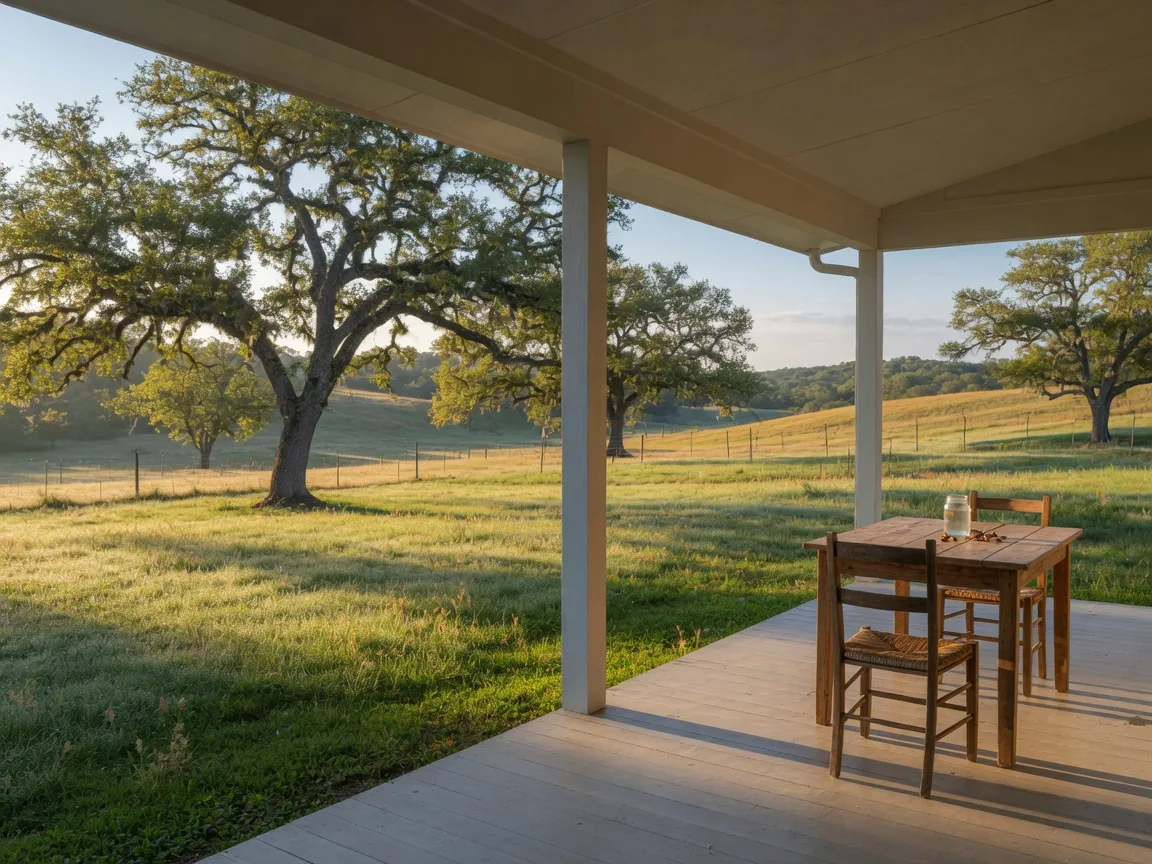
The affordability crisis that started the exodus
Austin became one of the most expensive housing markets in Texas without ever building enough homes to catch up. Median home prices in the city and its close-in suburbs have sat well above $450,000 for years, and when interest rates climbed, the monthly payment on that median price pushed many families past the point of reason.
The result is a familiar pattern in fast-growing metros: the city prices out the very households that make it work, and the families fan outward in search of the same life at a price a teacher, a nurse, or a young professional can actually afford. The fan-out here runs north on I-35, past Georgetown and Round Rock, into Williamson County and then Bell County, where Belton and Temple have become the landing zone.
That is not speculation, it is the reason apartment permits in Temple are up, new schools keep opening in Belton ISD, and the traffic on the corridor keeps growing. The families did not disappear. They moved north, and they kept their Austin jobs or found new ones on the corridor.
What $600K to $1M buys in Austin vs Belton
Let me give you the comparison that actually matters to a family with a real budget. Recent median resale prices in Belton have run in the low-to-mid $300Ks, while Austin's median has been north of $450,000, so the gap is not subtle at any price point.
In the $600,000 to $1,000,000 range, the difference becomes a different universe. In many parts of Austin, that money buys an older home in need of updates or a modest new build on a small lot. In Belton, the same money can buy a large new home, a custom build with high-end finishes, or a home on a multi-acre lot with Hill Country views, and at the top of that range, a brand-new custom ranch home in a community like Ranch at Latitude 31, where homes start in the high $700Ks on lots up to 3.11 acres.
The honest footnote: you are trading the city itself, the restaurants, the culture, the proximity. The question every family answers for themselves is whether a yard, a porch, and space are worth the drive. For a growing number of them, the answer is a resounding yes.
Remote work and the commute math
Remote and hybrid work cracked the last argument against leaving Austin. When you report to an office twice a week instead of five times, a sixty-to-seventy-minute commute becomes a twice-a-week cost instead of a daily one, and the savings on housing make that trade look brilliant.
The families doing this well are honest about the math: they count the drive time, the fuel, and the I-35 unpredictability, and they decide two hard commutes are worth four-figure monthly savings and an acre of land. Their employers were often the ones who made it possible, with hybrid schedules that keep the Austin salary while the family lives in Belton.
For families doing it badly, the story is different: a daily round trip of two-plus hours burns out the parents and drains the whole household. If you are considering the commute, drive it during real rush hour twice before you move. I cannot stress that enough.
Rule of thumb from my clients who made it work: the Austin-to-Belton commute is livable at two or three days a week, and it is soul-crushing at five. Know your schedule before you sign.
The shift to bedroom communities on the I-35 corridor
Belton, Temple, Georgetown, and the towns between them have become the classic bedroom communities of the new Austin: bedroom in the literal sense, places where the region's workforce sleeps, raises kids, and spends weekends, while the jobs stay concentrated in the metro core.
The difference between Belton and the closer-in suburbs is the timing. Georgetown and Round Rock have already absorbed a decade of price growth, and their entry price is now far above Belton's. Belton is the next stop on the same track, and it is earlier in the cycle: more land, lower entry prices, and the same corridor access that transformed the towns north of it.
Developers noticed before most buyers did. Production builders line the corridor, communities like Ranch at Latitude 31 are building out with custom homes, and Belton ISD keeps opening campuses. The infrastructure is arriving because the people already have.
How Belton ISD compares: the school question
The loudest hesitation families voice about leaving Austin's suburbs is schools, and it deserves an honest answer. Belton ISD is a B-rated district in the state's 2025 accountability ratings, with multiple high schools, four middle schools, a dozen elementary campuses, and specific campuses earning A ratings, including Lake Belton High School and Lakewood Elementary.
It is not a Georgetown-ISD-level brand name, and I will not pretend it is. What it is: a growing district that serves about 13,500 students, adds campuses as the community grows, and does something most districts cannot claim, welcoming thousands of military-connected families with genuine support systems. For most families, the honest comparison is between a good-but-not-famous district with plenty of programs and a famous district they cannot afford to live in.
If schools are your deciding factor, walk the feeder campuses for the exact homesite you are considering. Boundaries changed recently in Belton ISD, so the address matters, and I will pull the current assignments for you.
Deep dive: Belton ISD schools and every campus detailThe quality-of-life trade
The families who move north do not describe it as a sacrifice. They describe it as getting their lives back: dinner on the porch, kids riding bikes in the street, weekends at the lake instead of in traffic, a backyard big enough for the dog and the garden both.
Belton brings the lakes, a historic square, Friday night lights, and a pace of life that Austin lost somewhere along the way. The trade is real: fewer museums, fewer food-obsessed restaurant rows, fewer concerts on any given night. It is a trade of density for space, of options for peace, and the families making it are, overwhelmingly, glad they did.
Nobody who moved here for the right reasons regrets it. The ones who struggle are the ones who expected Belton to be a cheaper Austin. It is not. It is better at being Belton, and that is the whole point.
The flight of young families: what the wave looks like
Drive the school pickup lines in Belton and you will hear Texas accents next to California transplants, military families from every state, and ex-Austinites who still work remotely for the same companies they worked for in the city. It is a young crowd: first-time buyers in their early thirties, growing families, and second-timers cashing out of Austin equity to build the home they could never afford there.
That last group, the equity movers, is the sharpest signal of the trend. A family that bought in Austin five years ago often carries six figures of equity, enough to buy a lot in Belton outright and build a custom home with the difference. They are not fleeing so much as upgrading, and their arrival is pulling Belton's custom-home market up with them.
What it means for property values and demand
Demand from the Austin spillover does three things to a market, and Belton is showing all three: it raises the floor under prices, it tightens the buildable-lot inventory, and it compresses the timeline to make decisions. Homes that were marketed for weeks now attract multiple lookers in days, and good lots in communities like Ranch at Latitude 31 are snapped up by families who understood the market was not going to get cheaper.
None of this guarantees anyone's appreciation, and I do not sell promises. But the fundamentals are visible: constrained land, corridor infrastructure, a growing district, and a constant stream of families priced out of the metro. That is the recipe that transformed Georgetown, and Belton is earlier in the cycle.
How to buy while the getting is good
The getting is good when three things are true: inventory is available, interest rates have not slammed the door, and prices have not yet caught up to the towns north of here. All three are true right now, which is why the families who understand the corridor are not waiting.
My advice to a buyer in this market is the same advice I give my own clients: get pre-approved before you look, decide on the land before the plan, and move when the right lot appears, because it will not wait for the perfect one. If you are cashing out Austin equity, talk to a lender about how a construction-to-permanent loan stages the build. If you are a first-time buyer, know that Belton may be the last stop on this corridor where a starter budget still buys a real house with a real yard.
And when you are ready, we build at Ranch at Latitude 31 with Riata Builders, and my team can sell your current home on the same timeline we buy your lot. That is not a coincidence. It is the service the families on the move actually need.
See the community they are building toward: Ranch at Latitude 31“Austin did not get worse. It got expensive. And expensive is a reason, not a verdict. The families moving to Belton are not giving up the dream, they are finally able to afford it.”
Common Questions · 30 Straight Answers
Common Questions
These are the questions I hear every week, asked the way people actually ask them. Here is how I would answer each one if we were on the phone right now.
01 Why are families leaving Austin?
The core reason is affordability: median home prices well above $450,000 in the city while wages and household budgets did not keep pace, worsened by higher interest rates. Families are trading the close-in address for space, land, and a manageable payment in the surrounding counties, and remote and hybrid work made the move possible.
02 Is Belton the next big relocation hub?
Belton is already a relocation landing zone, not a future one. Census estimates show it growing from about 23,000 in 2020 toward 26,000, and the corridor is filling with families priced out of Austin's suburban ring. It is earlier in the growth cycle than Georgetown or Round Rock, which is exactly why buyers are calling it the next hub.
03 Can I commute from Belton to Austin?
Yes, about sixty to seventy minutes with normal traffic, but only you can decide if that works daily. Families who make it work usually commute two or three days a week on a hybrid schedule. Test the drive during actual rush hours before you commit, because I-35 is honest about its traffic.
04 What house can I get in Belton for an Austin price?
A strong example: many parts of Austin now ask $600,000 or more for an older home or a small new build, while in Belton the same money buys a large new home or even a custom build, often with acreage. At the top end, that budget reaches a brand-new custom ranch home at Ranch at Latitude 31, where homes start in the high $700Ks on homesites up to 3.11 acres.
05 Are homes in Belton a good investment?
Belton has the fundamentals that have historically rewarded long-term owners: constrained buildable land, corridor infrastructure, a growing school district, and steady family demand from the Austin spillover and the Fort Cavazos community. Past appreciation is no promise of future returns, and your home is first a home. But the market pressure on this corridor is visible and real.
06 Is the Austin exodus real or hype?
It is real, and you can see it without reading a headline: the traffic on I-35, the apartment construction in Temple, the new campuses opening in Belton ISD, and the license plates in every school pickup line. Individual families move for their own reasons, but the aggregate direction of people and money out of the Austin core is documented and ongoing.
07 Where are Austin families moving?
They are fanning out in every direction, but the northern I-35 line is the biggest stream: Georgetown, Round Rock, Hutto, and increasingly Belton and Temple in Bell County. Belton has become a common choice because it is the point where the prices drop decisively and the land gets real.
08 Is Belton cheaper than Round Rock or Georgetown?
Yes, typically by a wide margin on housing. Round Rock and Georgetown absorbed years of metro price growth, so their entry prices sit well above Belton's, and Belton's land-to-price ratio is dramatically better. You also get closer to the lakes than either of those suburbs.
09 Can I work remotely and live in Belton?
Yes, and many of Belton's newcomers do. High-speed cable and fiber internet are available across much of the town and corridor, and the cost-of-living savings let remote workers keep city salaries while living on acreage budgets. Confirm service at the exact address before you buy, because rural pockets still exist.
10 What is the difference in price per square foot between Austin and Belton?
Austin typically commands significantly higher price per square foot, often roughly fifty percent more than Belton in recent comparisons, and the gap widens for newer inventory. The per-square-foot gap is only part of the story; Belton's advantage in land, lot size, and total price is even larger.
11 How much land can I get in Belton?
A substantial amount. Standard resale lots in Belton are bigger than Austin's typical small city lots, acreage tracts are available around town, and ranch communities like Ranch at Latitude 31 sell homesites ranging from 0.51 acres up to 3.11 acres. Land is the single biggest reason families choose this town.
12 Is Belton family friendly for young families?
Yes, it is one of the most family-oriented towns on the corridor. The schools feed a tight community, the parks and lakes give kids real room to play, the square hosts family events, and the crime profile reads comfortable for a town its size. Young families are exactly who is moving here.
13 What is the Austin commute really like from Belton?
Sixty to seventy minutes with clear traffic, and meaningfully longer in the daily peaks, with I-35 backups the wild card. Families doing it two or three days a week find it manageable; five days a week is a different life. Test it twice before you commit.
14 Are schools in Belton as good as Austin suburbs?
Belton ISD is a solid, growing B-rated district with strong campuses, including A-rated Lake Belton High School and Lakewood Elementary, and deep military-family programs. It is not a famous brand like the top Austin suburbs, but it delivers good, improving education at an address families can afford. Compare the specific feeder campuses for your home rather than the district name.
15 Should I buy in Belton before prices go up?
History on this corridor says the earlier you enter a town in its growth cycle, the better your position: Georgetown and Round Rock were once the cheap stop, and their prices now dwarf Belton's. Nothing is guaranteed, but demand, land constraints, and corridor growth are all visible today. If Belton fits your life, the odds favor acting before the crowd finishes arriving.
16 Why are young families choosing Belton over Leander or Liberty Hill?
Belton offers the same hill country appeal at a materially lower entry price, with more land per dollar and two lakes, while Leander and Liberty Hill have already priced in years of growth. For a family that wants the lifestyle now and the equity later, Belton is earlier in the cycle.
17 Is Belton a good place to raise kids?
Yes. Kids in Belton get room to play, a lake for summers, parks and a splash pad downtown, a youth sports culture, and schools that know their students' names. The small-town supervision, neighbors who watch out, and Friday night lights are the things parents tell me they missed growing up, and their kids get them here.
18 What amenities does Belton have for families?
Two lakes with boating and fishing, a historic square with shops and a classic theatre, the Bell County Museum, a water park for summer, miles of trails, the county expo center with family events, and a growing restaurant scene. Plus Temple's services and retail are ten to fifteen minutes north.
19 How fast are Belton home prices rising?
Belton has shown steady annual appreciation typical of the I-35 corridor, with strong recent years driven by the Austin spillover and limited land. Exact percentages vary by neighborhood and year, so look at current comparables for your preferred area and let me pull the real numbers for you.
20 Is there a housing shortage in Belton?
Inventory is healthier than the boom years, with resale options across the range, but the shortage is in buildable land and premium lots: the good acreage homesites move quickly. Families arriving now often plan a custom build because the right existing house on the right lot never surfaced.
21 Can I build a custom home in Belton for less than Austin prices?
The custom build itself is priced by the plan and finishes, but the total equation favors Belton dramatically because the land is a fraction of the cost. A custom home at Ranch at Latitude 31 starts in the high $700Ks on lots up to 3.11 acres, a combination that is essentially unavailable at that price inside the Austin metro.
22 What is the tax difference between Travis County and Bell County?
Both counties use the Texas property tax system, and Bell County rates are broadly comparable to or slightly below Travis County in many comparisons, with every district setting its own rate. The far bigger factor is price: a $350,000 Belton home owes far less total tax than an $800,000 Austin home even at similar rates. The homestead exemption applies either way.
23 Is Belton safe for families?
Belton is broadly considered a safe, family-focused community with a full-time local police force. Crime is never zero in any town, so check current statistics for your specific neighborhood from the Belton PD and Bell County. The daily experience for most residents is comfortable and quiet.
24 Do families regret moving from Austin to Belton?
In my experience, the families who move for clear reasons, space, schools, land, payment, and accept Belton as Belton do not regret it. The ones who struggle expected a cheaper copy of Austin and found a small town instead. Know what you are choosing, and you will love it.
25 What do people miss about Austin when they move to Belton?
The honest list: restaurants, live music, museums, and the density of options on any given night. The good news is Temple is minutes away, Austin is an hour, and the things that matter weekly, groceries, clinics, retail, activities, are all close. Most families report the trade feels like a win by the first summer.
26 How do I sell my Austin home and move to Belton?
Work with a team that can do both sides of the move at once. My team sells your Austin-area home while we help you lock the Belton lot and plan the build, coordinating the closings so you are never stuck carrying two houses. Start with a market analysis of your current home and a look at the Belton inventory.
27 Is Belton worth the trade-off for a younger family?
For most young families, decisively yes: a real yard, a manageable payment, room for growth, and a community that wraps around your kids outweigh the lost urban density. Every family is different, which is why I suggest a weekend visit, not a spreadsheet, before you decide.
28 What is the best time of year to buy in Belton?
Like most of Texas, the fall and winter months often bring slightly better negotiating room, while spring and summer bring more inventory and more competition. The truly best time is when you are financially ready and the right property appears. Markets do not wait for seasons.
29 Are there jobs in Belton for people leaving Austin?
Belton's employers include education, county and city government, healthcare clinics and services, the university, and retail, with Temple's medical campus and Killeen's economy minutes away and Fort Cavazos anchoring steady demand. Many newcomers also keep Austin-area jobs on hybrid schedules. It is a commuter-and-remote economy, and it works.
30 How do I start planning a move from Austin to Belton?
Do the things in order: test the commute, visit the square and the lakes, get pre-approved, decide rent-versus-buy, and then start looking with a local agent who knows the lots and the districts. Call or email me and I will build your Belton plan, including the custom-build path if that is where you land.
Start Your Custom Home Journey
It is never too late to build the life you deserve.
Whether you are moving to Belton in six months or six years, start the conversation now. Lisa and the Lioness Home Group answer every call and every email, and we will tell you the truth about this market, these lots, and this community. That is the whole point of having a fierce advocate on your side.
Or email lisa@lisacopeland.com
Keep Reading
More from the Why Belton guide
Why Belton
Moving to Belton, Texas: The Complete Relocation Guide
The full playbook: cost of living, neighborhoods, taxes, utilities, weather, and the step-by-step move.
Read the guideWhy Belton
Belton vs Temple vs Salado: Which Central Texas Town Wins?
Where Belton fits in the corridor and who each neighboring town serves best.
Read the guideWhy Belton
Belton ISD: The School District Deep Dive for Families
Schools are the loudest hesitation for ex-Austin families. Get the real district picture here.
Read the guide